Mostrando entradas con la etiqueta potatoes. Mostrar todas las entradas

lunes, 20 de agosto de 2012

New York Steak with Dried Cherry Balsamic Reduction and Bacon-Salted Frites

Nothing says "I love you" like steak. Well, maybe good scotch and a cigar. And a BJ. But still, steak ranks up there with the best public displays of affection conceived by mankind. And steak cooked properly, perfectly, keeping the center at 65°C while uniformly caramelizing the outside, seasoning it just right and serving it with a side of civilized potatoes can only be described as a little slice of Nirvana.

I am a Rib Eye man myself, but my family doesn't love fat as much as I do, so this time I cooked New York strip steak. New York steak comes from the short loin primal, and can often substitute for T-Bones, Porterhouses and Rib Steaks if the marbling is right.

The thing about New York steak is that it's really easy to fuck up, since it's often leaner that other cuts and will burn and dry to a rubbery piece of shit if overcooked. There is no way in Hell a self-respecting, red-blooded human can process a well-done New York steak. Seriously, if you like your steak well-done, don't eat steak. Have a rat burger at McD. Char yourself some hotdogs; after all, they're nothing but lips and assholes.

So let's start with as many steaks as there are people on your table. DO. NOT. TRIM. THE. FAT. Seriously. Don't do it, fucker. I'm watching you. Season the steaks liberally with sea salt and coarsely ground pepper and set aside for a while.


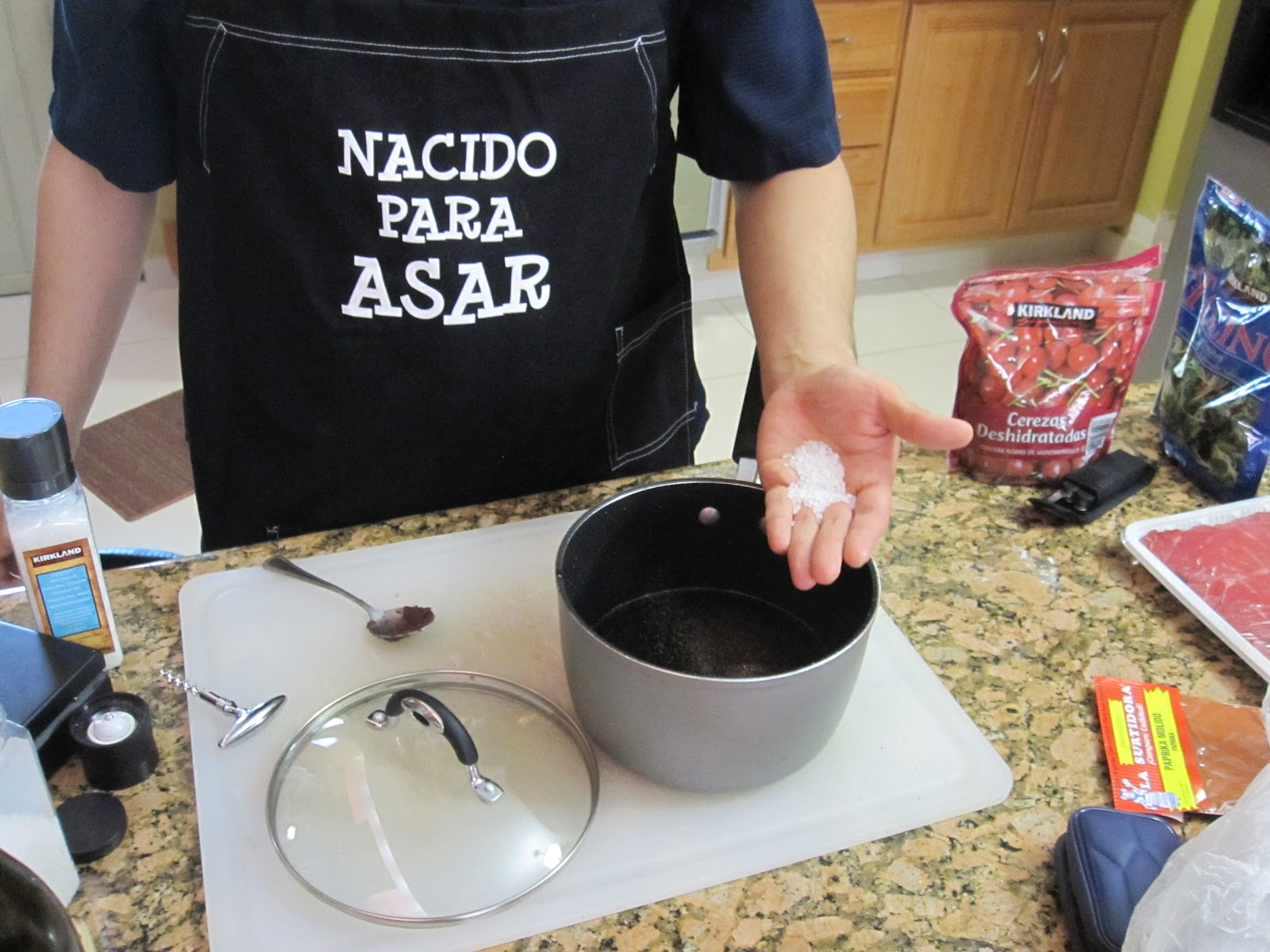
Preheat your oven to 375°F. Take some crumbled bacon and dehydrate it in the oven for 15 to 20 minutes. It should be crunchy but not chared. Let it cool and place in the food processor with at least 2x as much sea salt as bacon and a little paprika (for color). Pulse it to combine until any fat left in the bacon is indistinguishable. Set aside.


Take at least 1 potato per guest and cut into 8 regular wedges. Nuke'em for 5-6 minutes, covered, and let them rest in the microwave while you prepare the rest of the meal.

Put a couple of tablespoons of fig preserves in a sauce pan. Add some dried cherries, half a bottle of your favorite red wine (in this case, Shyraz) and a good dash of balsamic vinegar. Season with salt and pepper and simmer over a medium high flame until thickened. While you're at it, take a large pan (preferably cast-iron, and heat it over a very high flame.
Home-made, of course


As the sauce simmers, take the potato wedges out of the microwave and add a decent amount of olive oil, pepper and parmesan cheese. The heat and moisture from the potatoes will melt the cheese and make it stick to the wedges, giving you that all-natural MSG goodness that can only come from parmesan. Place them on a single layer on a cookie sheet and bake for 15 to 20 minutes or until browned.


 Once the potatoes are nice and browned, take them out of the oven and sprinkle them with bacon salt.


SHELDON MOMENT ALERT

Glutamic acid is the most abundant non-essential aminoacid found in foods. Monosodium glutamate was first synthetized in 1908 by japanese scientist Kikunae Ikeda, who patented it and sold at as Aji-no-Moto (Essence of flavor), Professor Ikeda also discovered the elusive 5th flavor, umami, elicited by the activation of glutamate receptors on the tongue mucosa. All aged, dry cheeses contain vast ammounts of glutamic acid, which makes them excellent flavor enhancers. The infamous "Chinese Restaurant Syndrome" is nothing but the result of a single anecdotal report by a man called Robert Ho Man Kwok, and it has been extensively disproved.
END SHELDON MOMENT

Now add just a little olive oil to the heated pan and place the steaks (always laying them away from you, or risk grease splatter), never overcrowding the surface. Do not fucking touch them again for 5 minutes. Seriously, don't. You need them to char on the surface to develop maximum flavor. Use tongs and a large spatula to flip them. Puncturing them with a fork will only render the juices out, this creates steam and hinders  caramelization. Steaks should only be flipped once. And it's not some snobbish dick shit about knowing your meat. Steaks can be equally well cooked flipping them once or flipping them frequently. It's just more practical to leave them be and let residual heat work its magic.


Take the steaks out of the pan and add a dash of red wine to whatever browned bits were left in the pan, scrape them and add this liquid to the balsamic reduction.The steaks must rest for 5 to 10 minutes, loosely covered with aluminum foil, so that the protein relaxes and the juices are not forced out when you drive your knife through it.

Now plate, eat, and be happy!

This is my sister, a woman that despises adding fruit to anything other than a smoothie. She fucking loved it
Printer-Friandly version:
New York Steak with Dried Cherry Balsamic Reduction and Bacon-Salted Frites
Serves 6

6 New York Steaks, about 5Oz each

Balsamic reduction:
2 cups dry red wine
1 cup balsamic vinegar
1 cup dried cherries
3 Tbsps fig preserves
Salt and pepper

Bacon salt:
1/3 cup cooked bacon, dehydrated in the oven and cooled
1 cup coarse sea salt
1 Tbsp paprika

Civilized Frites
6 medium Idaho potatoes, cut in wedges
Olive oil
Pepper
Parmesan cheese


  1. Season your steaks profusely with salt and pepper and set aside
  2. Simmer all the sauce ingredients over a medium high flame until all of the alcohol has evaporated and the sauce thickens
  3. Pulse the bacon, salt and paprika in a food processor until combined and set aside.
  4. Parboil the potato wedges in the microwave, then toss with olive oil, parmesan cheese and pepper. Lay on a baking sheet and brown for 10 minutes in a 375°F oven
  5. Heat a large skillet and sear the steaks for 5 to 8 minutes on each side, or until interior temperature reaches 65°C if you have a meat thermometer.
  6. Deglaze the pan with a splash of red wine, then add the browned bits to the sauce.
  7. Season the frites with bacon salt to taste, then plate with the steaks covered in sauce
  8. Stay fucking awesome

viernes, 22 de junio de 2012

Cuisses de Canard Braisées avec Vin Blanc et Magrets á la Sel de Mer

Fuuuuck... I warned you that a new age of douchebaggery was coming. It took me too damn fucking long, but here it is. I've been collecting several recipes over the past few weeks, but haven't actually had the time to sit my ass down to type. This duck, however, was prioritary. You see, before this dish, more than 2 years had passed since the last time I cooked duck. Sucks dick, I know, but duck is amazingly hard to find around here.

So I got my filthy paws on a frozen canadian bird. Purists will want to kill me, and with good reason, but the times were desperate. My duck jones had to be satisfied. Also, paying a shitload of money for a lousy bird commands a very pretentious and pedantic dish. Something long, complicated and douche-y sounding. Something French.

This is not exactly a traditional french recipe, but rather a sort of scrapbook of my memories there.


And my memories are kind of hazy about that whole period
Start with a whole 6-lb duck and break it down to pieces. Get your poultry shears and trim the excess skin and fat from around the neck and tail. Starting from the ass, cut your way up to the neck along the outer edge of the breast, then pull away and separate.


Take a very sharp knife and run it down the breastbone, separating the meat from the ribs and leaving as little as possible behind. These are your magrets. Score the skin superficially at 2 cm intervals, salt liberally, wrap in plastic at place in the fridge.


Now cut down the skin in front of the hind quarters all the way o the joint. Dislocate it pulling outward and cut the meat behind. Trim some of the skin and fat from the edges and refrigerate.


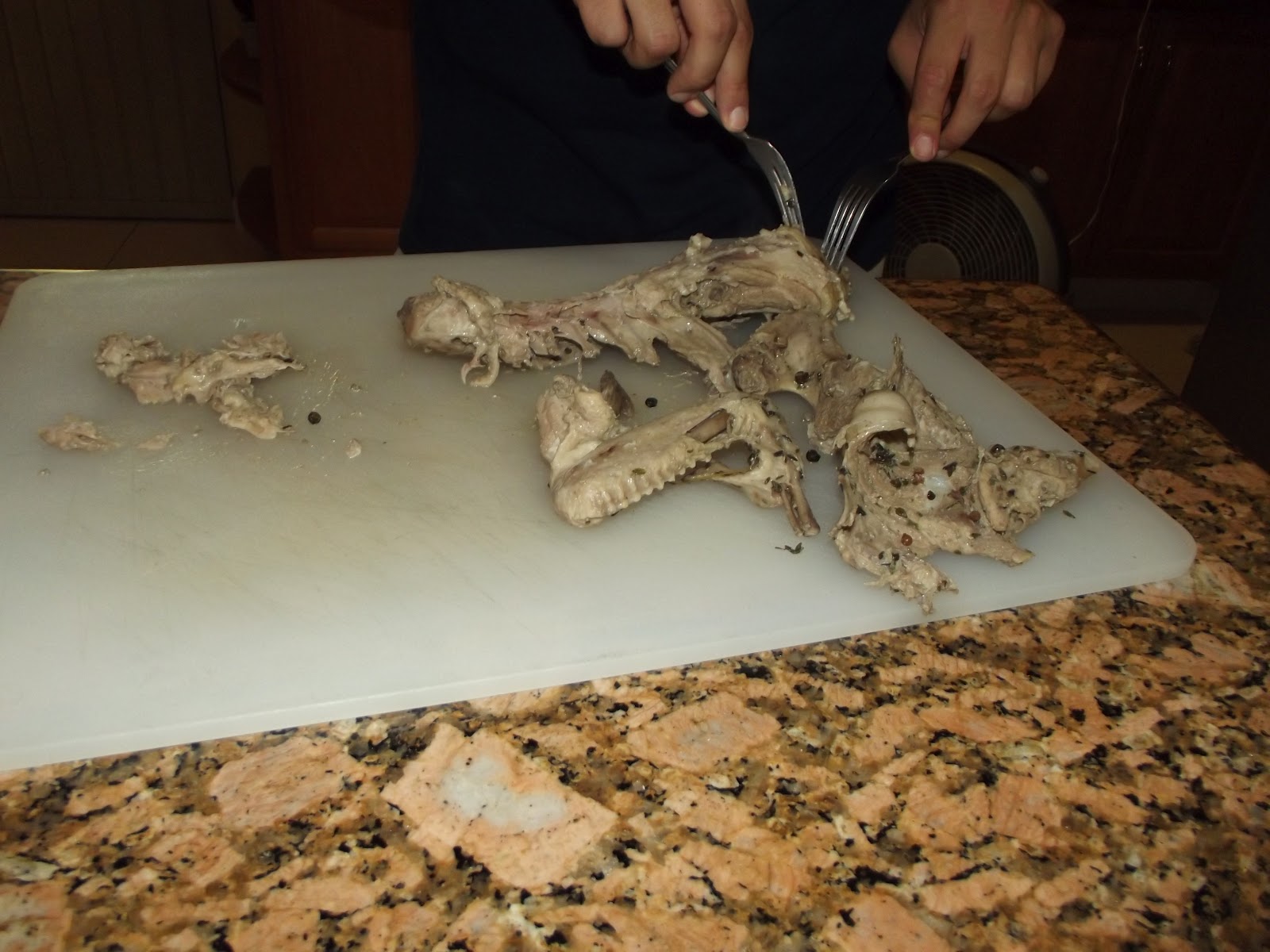
Place the carcass in a pot with 1 gallon of water and some aromatics. In this case: 1 onion, 2 carrots, 2 ribs celery, a handfull of black pepper and a bouquet garni of thyme, rosemary and parsley. Boil for 2 hours, strain and discard everything but the duck carcass. Pull and shred the meat from the carcass and reserve for another use (in this case, duck confit for a salad a few days later... more on that eventually). Reserve the remaining broth for another time.


Take 4 cups of the duck broth, cool it down and skim the fat from the surface. Don't be a moron, reserve the fat. It's fucking awesome.


Now let's braise the legs.

MON DIEU! ALERTE DE MOMENT SHELDON!

Braising is the cooking technique where a protein is cooked using both moist and dry heat to obtain a different flavor. It's mostly reserved for tougher pieces of meat, but it can be used on pretty much anything you want. The rationale behind it is that dry heat at the begining of the cooking process will trigger a Maillard reaction (more on that next week) on the surface and create flavor, while the moist heat will dissolve the collagen in the meat and soften it. This particular kind of braising, where dry heat is applied twice to the protein, is exactly how we cook carnitas (pulled pork) here in Mexico, so feel free to try this with pork.
FIN DE MOMENT SHELDON

Start by browning them evenly with a little olive oil, just 5 minutes per side. Now add some chopped onions and thick-sliced potatoes. Add the 4 cups of duck broth and a little over 2 cups of white wine, in this case, a cheap-ass pinot grigio. Place the duck legs on the vegetables and make sure they're covered by the liquid, cover and leave be over a medium-low flame for 2 1/2 hours, until most of the liquid evaporates and the vegetables are sautéed in the rendered duck fat.


Yes, the bottom burned a little, so I discarded those potatoes. But the rest was amazing
Ten minutes before you turn off the duck legs, cook the Magrets. Place them skin-side-down on a cold skillet and turn on the flame on medium high. Forget about them for about 10-15 minutes, they'll cook in their own fat (which, of course, you will reserve afterwards) and the skin will brown beautifully. Turn them over and cook for another 2 minutes. They should still be a little red inside.

To serve, place some of the potatoes and onions on a plate, arange a duck leg on top of them and spoon whatever liquid was left in the pan on top. If you didn't get any, deglace the pan with some more wine, add a little butter dipped in flour and whisk until a sauce forms. Slice the magret crosswise and fan out in front of the legs.


Get ready to have your mind (and body) blown the fuck away.

Printer-Friendly version:
Duck Legs Braised in White Wine and Rare Duck Magrets with Sea Salt

1 6lb duck, broken down.
2 large onions
2 large celery ribs
2 large carrots
2 sprigs each of thyme, rosemary and parsley
salt and pepper

Or you can take the pussy way out and get:
2 duck magrets
2 duck hind quarters
4 cups chicken stock

1 bottle dry white wine
1 lb small new potatoes


  1. Break down your duck and make a stock out of the carcass and the aromatics. Boil for about 2 1/2 hours, then strain and discard all solids but the meat. Pick the meat from the bones and reserve for another use. Cool the broth and skim away the fat and reserve as well.
  2. Salt the magret liberally with sea salt and wrap in plastic wrap. Set aside.
  3. Brown the duck legs in a little olive oil until the skin is pale golden (about 5 minutes on each side), then add sime sliced onions, potatoes, 4 cups of stock and 2 to 3 cups of dry white wine. Braise over a medium low flame for about 2 hours, until most of the liquid evaporates.
  4. Set the magrets skin side down on a cold skillet, turn on the heat to medium high and leave them the fuck alone for 8 to 10 minutes, then flip (ONLY FUCKING ONCE!) and cook for another 2 to 3 minutes. The meat must be medium done.
  5. Deglaze the pan where you cooked the legs with some wine, scraping all the browned bits off, then add some butter dipped in flour and whisk until a sauce forms
  6. Plate the legs over a mound of potatoes and spoon the sauce on top. Slice the magrets think and fan out the slices around.
  7. Get laid like a rockstar